Revealing AI usage and content to users
Project Overview
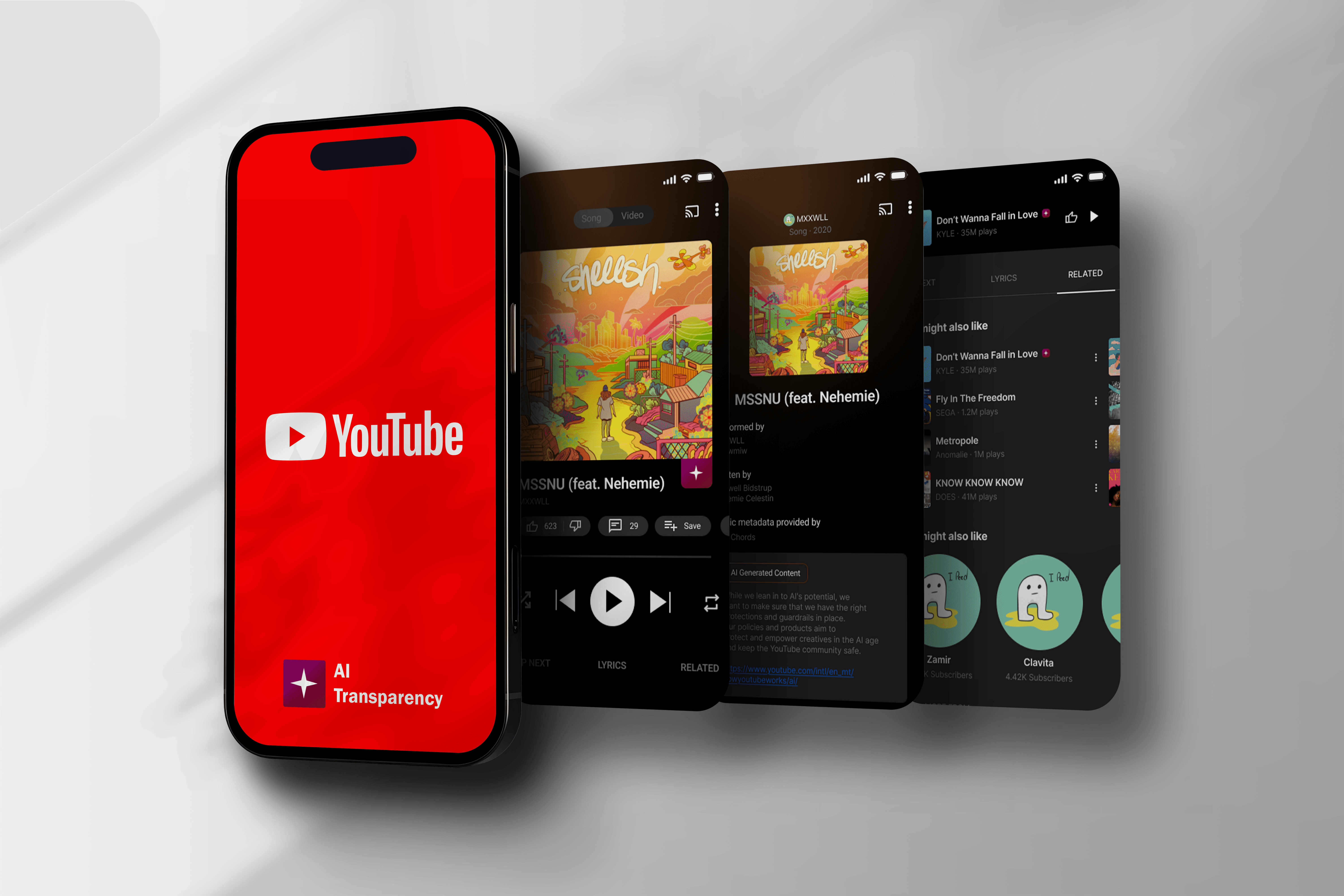
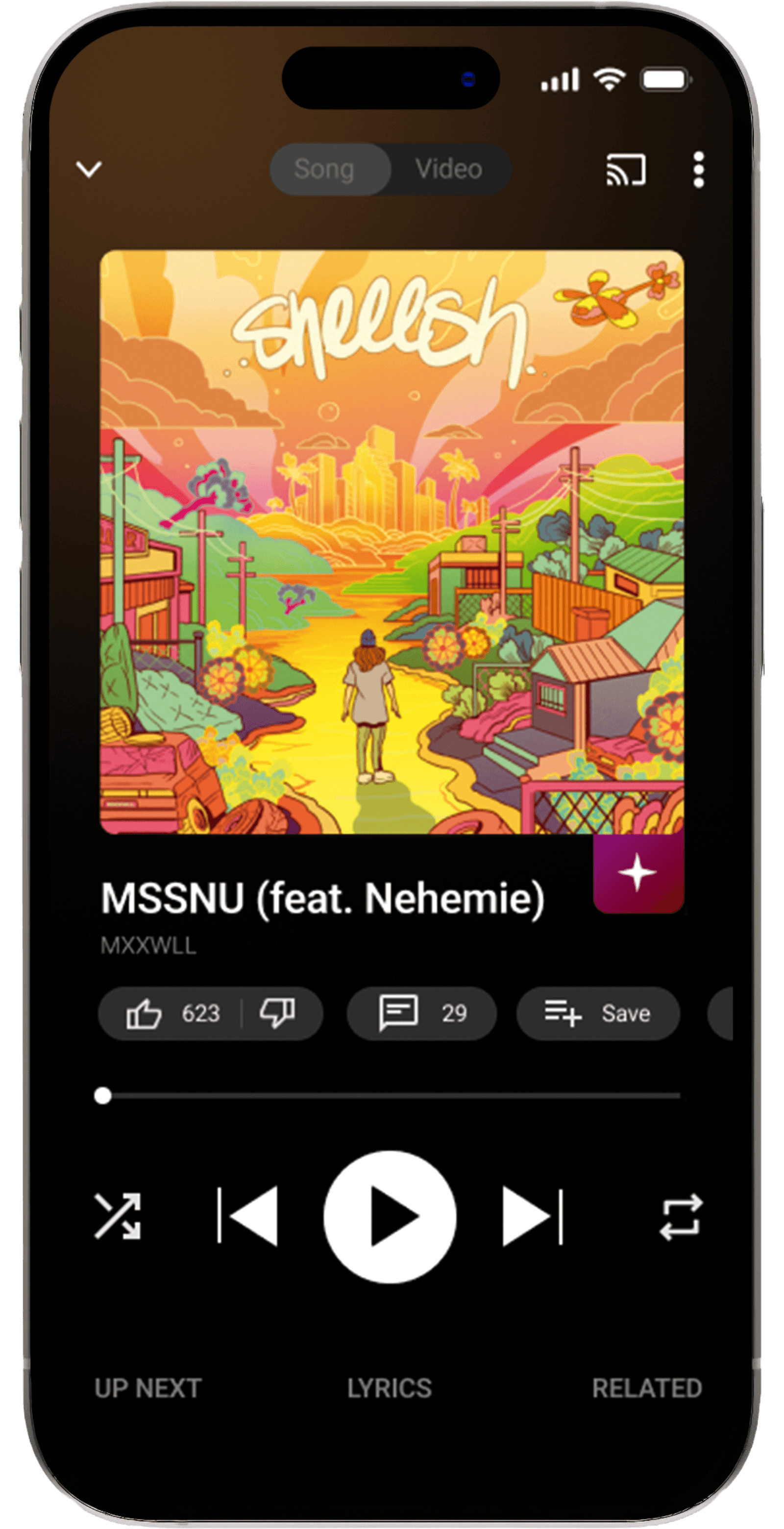
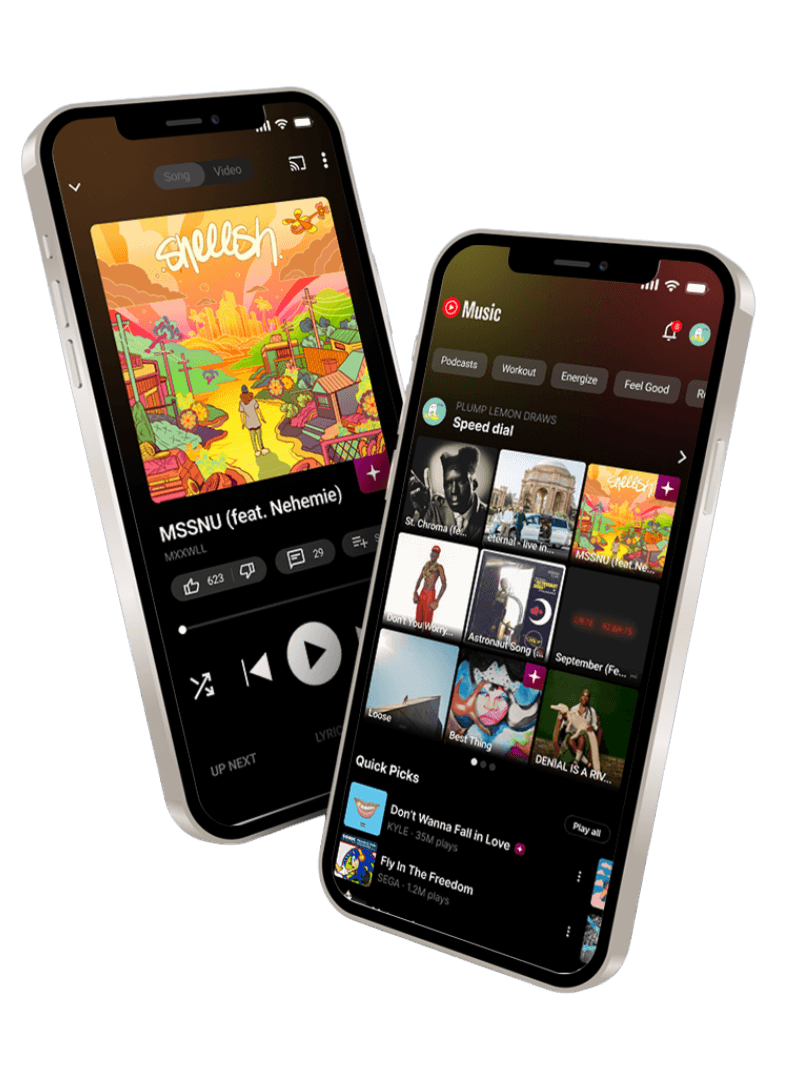
Music Transparency Music Transparency brings visibility to how AI-generated music appears in playlists without users realizing it, introducing features that help users recognize AI content, learn how it’s used, and take control of their listening experience.
Ever listened to a song and really enjoyed it? You go to find the artist behind it and after several minutes of confused looking, you realize the artist generates their music through AI. Instant delete.
Annoying
Users are growing frustrated with the increasing presence of AI-generated music in their listening experience, especially due to the lack of transparency and control surrounding its use. This reveals three key issues to be addressed:
The
Solution
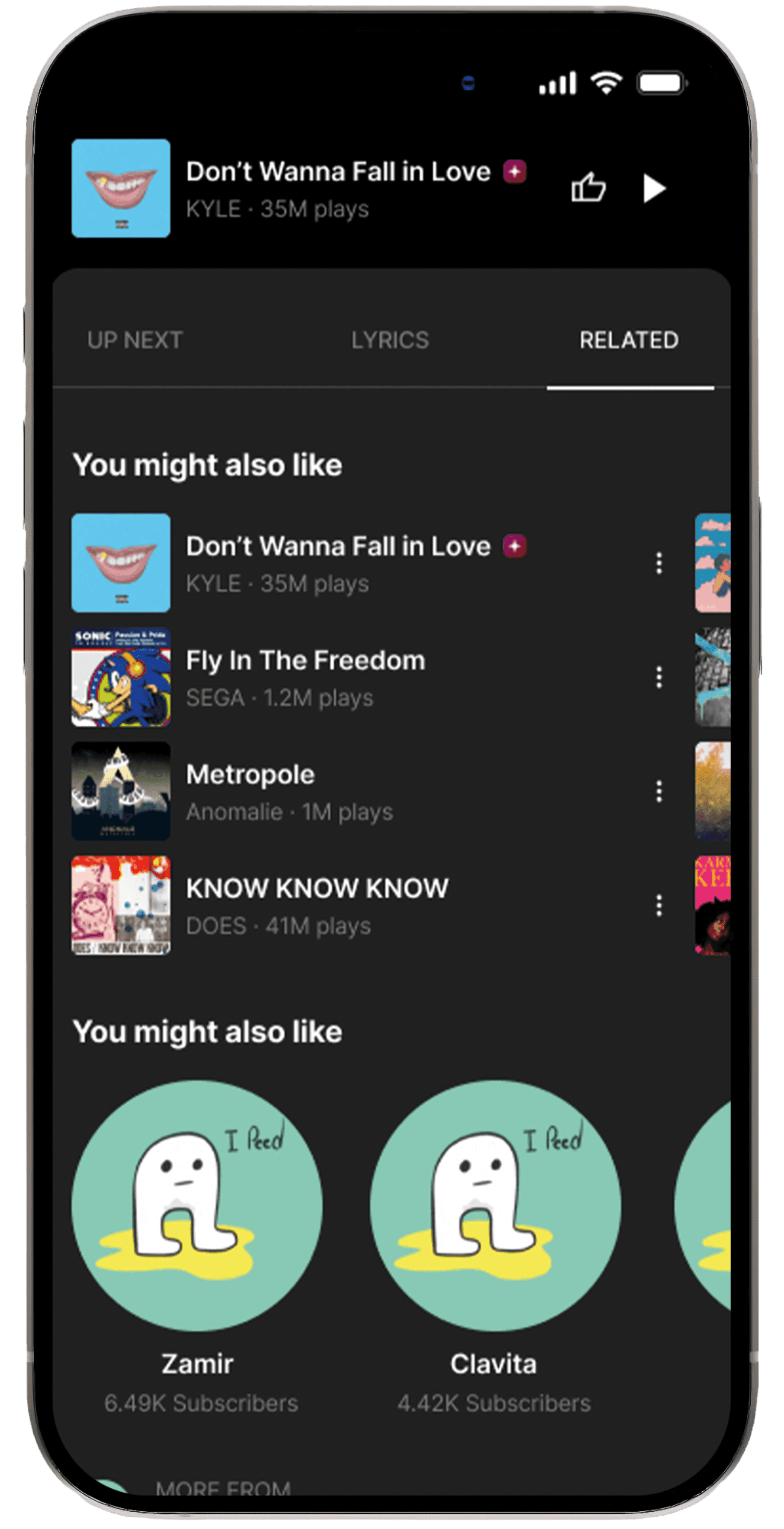
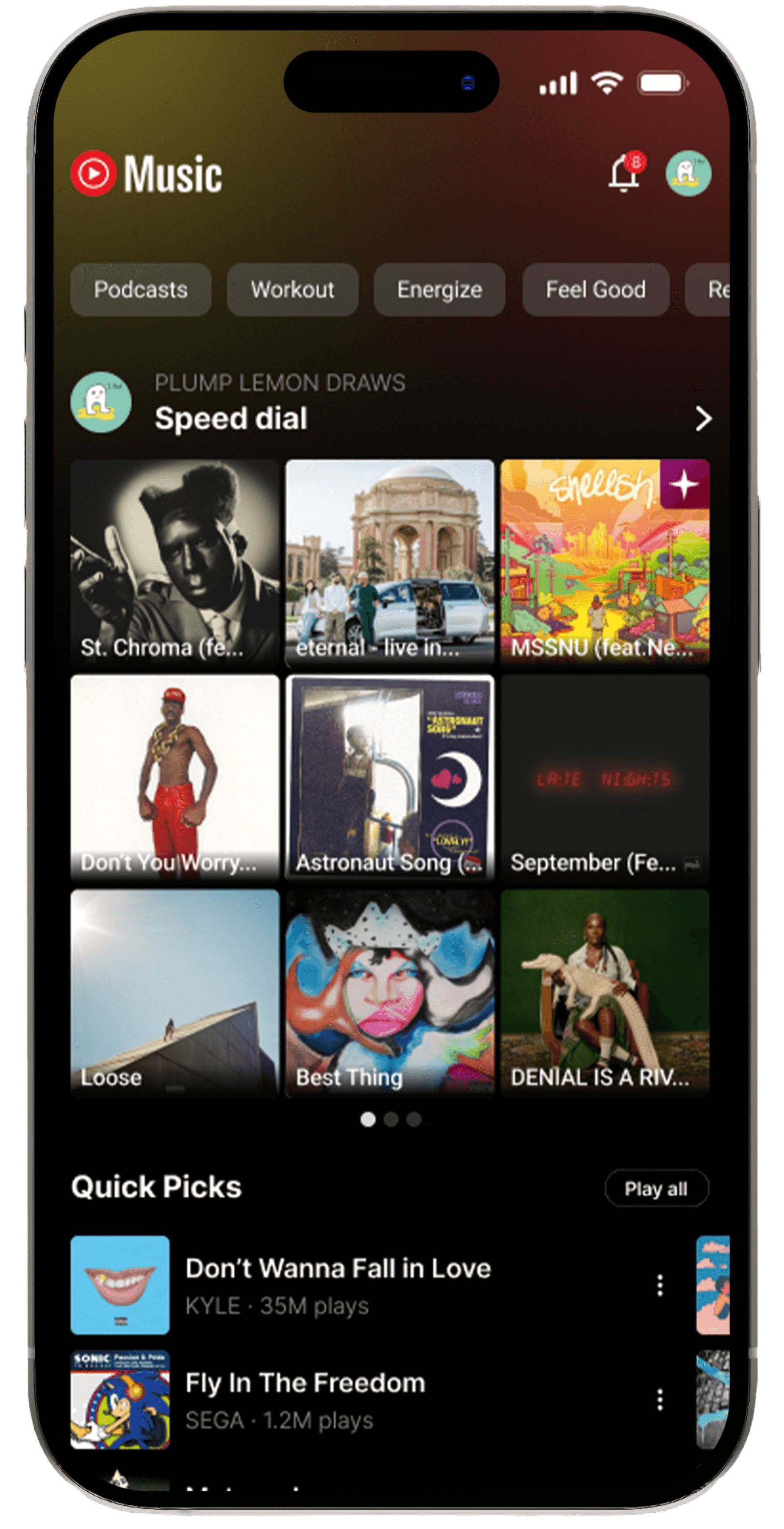
To ensure AI usage is apparent to users, YouTube Music was used as a platform to implement features that allow users to recognize AI songs, learn more about them, and have more control in blocking AI music in their feed and recommended.
AI Info
This flow showcases how AI songs are identified as well as an option for users to learn more about Youtube Music's AI policy so they can be more informed.
AI Recommended
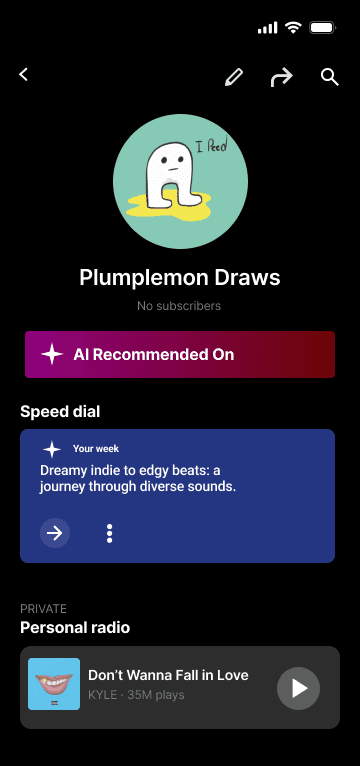
Showcases a feature allowing users to turn off AI recommended music from showing up in their feed or playlists in the future,
75%
showed people didn't want any kind of AI music in their feeds.
79%
of Artists are concerned and displeased of their likeness being used in AI music.
50%
voiced ethical concerns with AI generated music.
Why is there More AI Music?
Ease of Use
Generating AI music is as simple as pressing a couple of buttons, such as choosing the genre, mood, or pace and users can generate hundreds of songs in quick succession with ease.
It's Fun!
With AI generated music being easy to pick up and use, there are plenty of AI generated music out there made for fun.
How is AI music being regulated by other companies???
Current Competitors
After researching the rise of AI music and its challenges, I identified three platforms that have begun addressing its use and implementing features to deal with them, the three being:
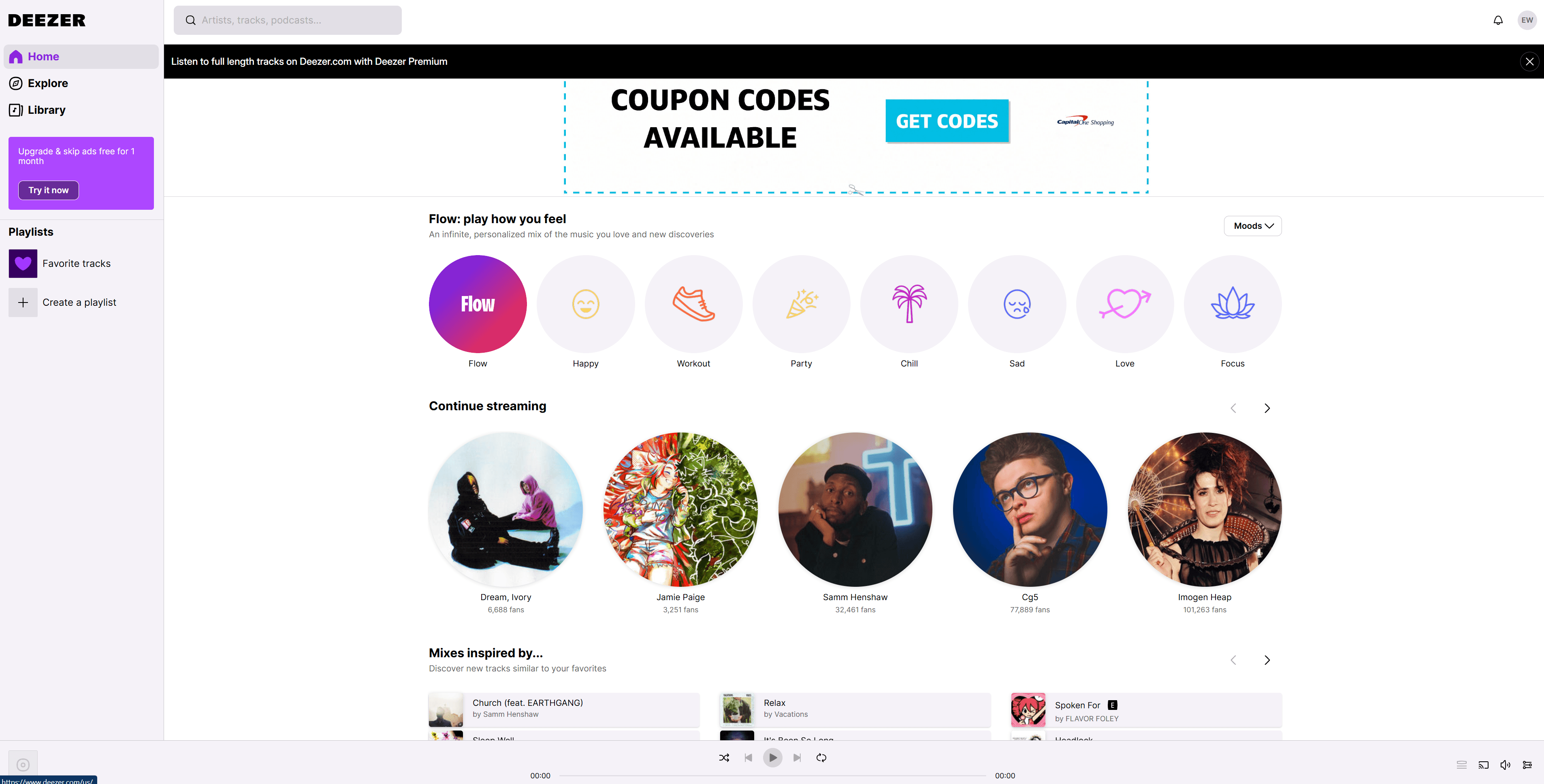
Deezer
Music streaming platform that implemented visual tags on what songs are AI generated.

Spotify
Music platform that has regulations in place that limit AI from scraping musicians music on the platform.

Youtube Music
Music streaming platform that has AI regulations in place, but doesn't enforce it.
With the competitors established, I established three main points of interest to ensure the user stays in the forefront of the research:
Implementation
How did they tackle AI music? Was it clear what was AI and what wasn't?
Acts of Control
Do the users have control over what content is being shown to them?
Educate
Are there ways users can access additional information regarding AI music?
Key Insights
Three main key points arose after understanding user frustrations and pain points with the companies:
1
No Blocking AI
No easy way to opt-out of AI music from showing on users feeds.
2
No AI Disclosure
No easy way to see if a song is AI generated or not, making it tedious at times to find real songs.
3
Info Restrictions
Lack of easily accessible information regarding AI and how it's being used and regulated on the platform.
Tackling Interviews
After understanding some of the context of the rise of AI, it's lack of regulation, and how other music platforms were handling the issue, there was enough of an understanding to move on to interviewing the users. The main points I wanted answered from each user was:
1
Opinions
How do they feel about AI generated music?
2
Frustrations
Have they encountered any annoyances or issues with AI music?
3
Suggestions
How would they regulate or deal with AI music? How do they deal with it now?
4
Its Use
Do users believe AI music is doing more harm than good?
Interview Findings
From the interviews, the results showed that:
80%
Of interviewees view AI negatively, mentioning how its hurting more than its helping.
100%
Mentioned wanting to have options to decline their music being used in AI.
100%
Of interviewees wished to know how their music is being used and why.
100%
Of interviewees believe AI needs to be regulated, mentioning how many need copywriting.
Comments from users that stood out mentioned some key issues with AI:
"I feel like AI music has no soul whenever I hear it in a playlist… Its really dumb that there isn't an easy way to know if a songs AI before listening to it…"
"The fact that AI isn't regulated enough is… annoying cause they keep producing tens of hundreds of songs and because I clicked one by accident, I'm getting recommended more…"
"Wish AI music wasn't even on platforms, but if I had to regulate it I'd at least want a way
to turn it off…"
Key Insights
Interviewees general idea of AI music was widely negative, mentioning how it's hurting actual musicians and creating soulless music that wasn't needed. From the results and additional conversations with the interviewees, it became apparent that there was three main issues that users wanted addressed:
1
No AI in Recommended
A way to opt-out of AI generated contented on their feed.
2
Understanding AI Use
A better understanding of why AI is being used on the platform in the first place.
3
Transparency
A way to see what song is AI and
what isn't.
Personas
After getting feedback and questioning users of their takes and opinions with AI music, I moved to creating two personas, one for the group I interviewed that actively listens to music, and the other, the group that creates music.
Tobias Dones

Age: 22
Family: Single
Occupation: Designer
Gender: Male
Located: San Marcos
Education: Bachelors
Bio
Tobias is a Graphic Design student at a university. They enjoy playing guitar and posting their music online and attending music concerts on the weekends.
Goals
Obtain a bachelors
Improve music career
Work with different musicians
Frustrations
AI undermining music language and soul behind it
Reaching a wider audience is difficult
Unaware what music is and isn't AI generated
Personality
Chill
Introverted
Kind
Comical
Quote
"It's sad that people replaced something that comes from the soul…with AI. Their music is lifeless…"
In App Suggestions:
A way to turn off AI recommendations in their feed.
Bethany Jones

Age: 23
Family: Single
Occupation: Student Worker
Gender: Female
Located: San Marcos
Education: Bachelors
Bio
Bethany is currently a University student learning to become a Graphic Designer. She enjoys going out with her friends and being able to enjoy life at a leisure.
Goals
Graduating ang getting an apartment and job.
Learning from peers to better design skills.
Travel
Frustrations
Finds a nice song only for it to be AI then blocks them.
Annoyed with the AI in her recommended.
Personality
Extroverted
Caring
"Winging-it"
Comical
Quote
"Having AI in my music is so annoying, because its people that do nothing and just prompt to get a result…"
In App Suggestions:
Wants to know what songs are AI clearly in her feed.
Once a solid foundation of user pain points and issues from many users was established, then began the iteration stage of ideas and concepts, focusing on what problems to solve and how to tackle them.
Aid users in controlling AI content shown to them?
A toggle or button that users can use to switch between showing AI content or not in their feed or settings.
An option in settings that turns off and on when wanted.
In playlists, having a toggle that excludes AI music so you can download it without AI music.
Help users be aware of changes made to the app regarding AI?
Tags on songs saying "AI generated"
An icon that communicates its AI.
An overlay popup that mentions how some songs are AI generated. Could be within a playlist specifically.
Inform users of changes made to the app regarding AI?
A short tutorial or showcase of what's new when users log on for the first time after the update.
Highlighting the different changes briefly when they log in before fading away.
Exclamation marks on added features that go away after being clicked or when the user closes the app.
Inform users of AI usage on Youtube Music?
Having it prominently stated in settings.
User Flow
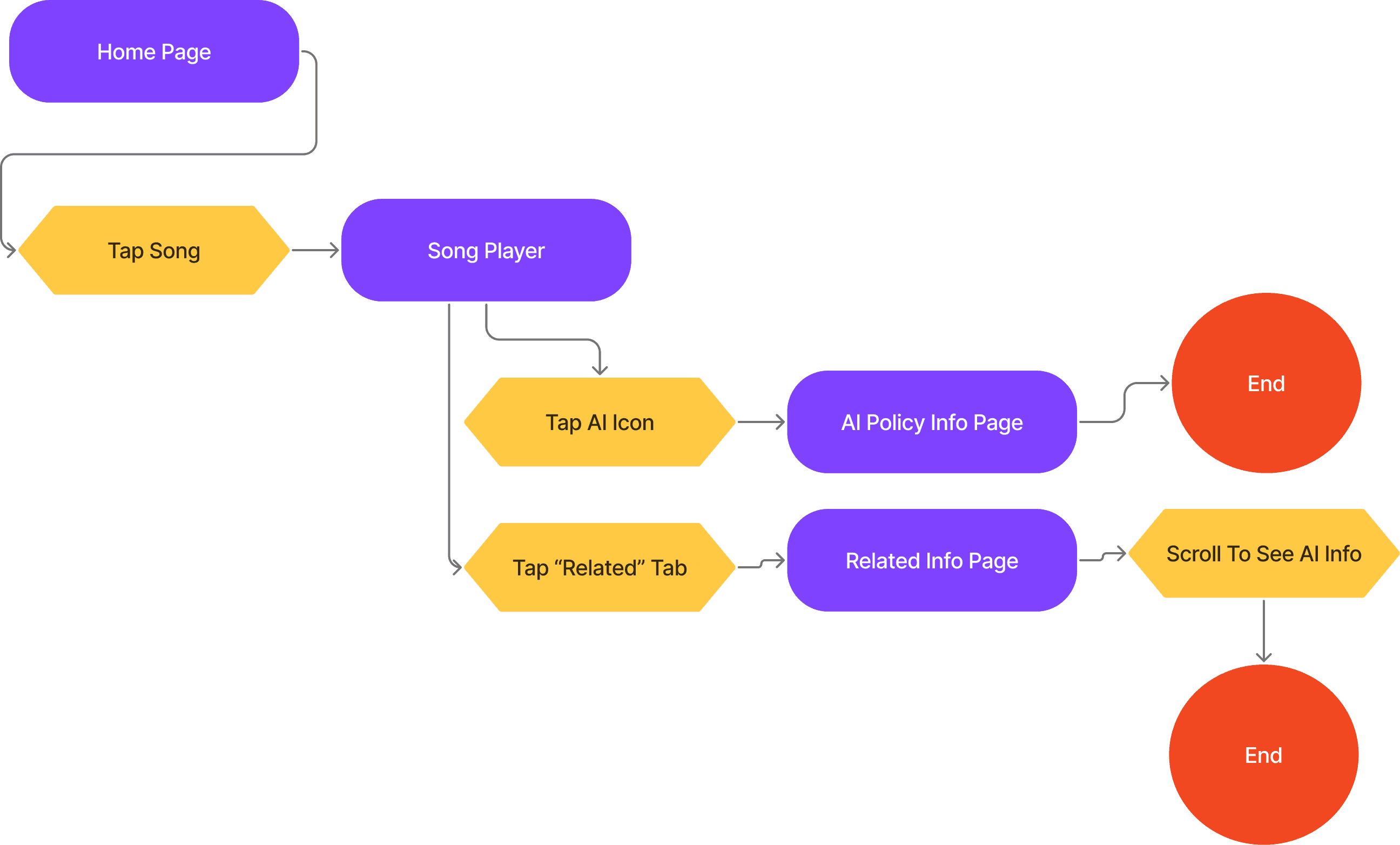
After establishing the features to put into Youtube Music, two different user flows were created, one for when the user wants to learn more about AI usage through the songs, and one for when the user wants to turn off AI recommended music.
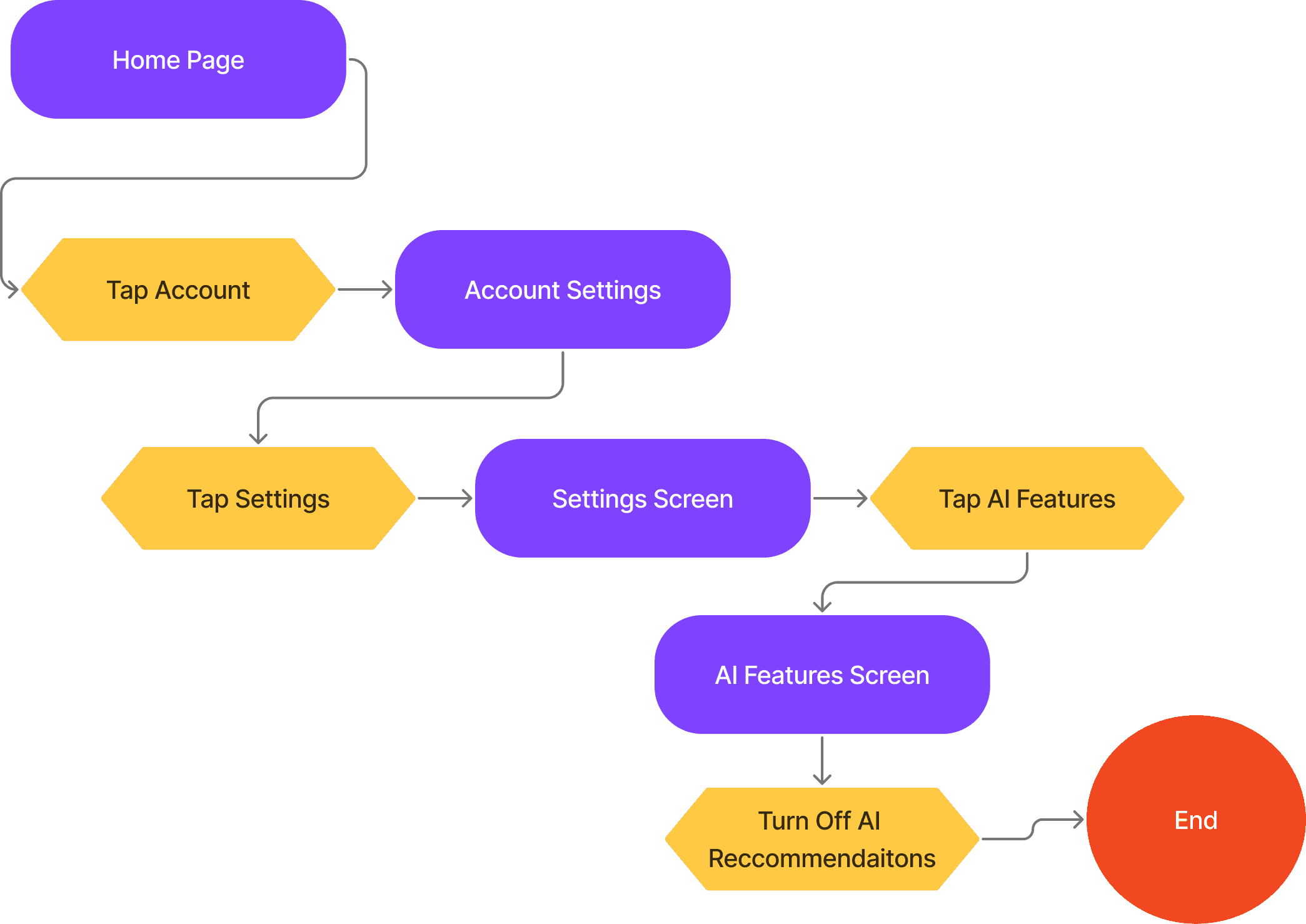
Turning off AI Recommendations
Recognizing and Learning about AI
Designing an interface that encourages AI transparency meant abiding to YouTubes design guidelines, or at least doing the best that I can. Fortunately, someone designed a YouTube template shown below that could be worked on.
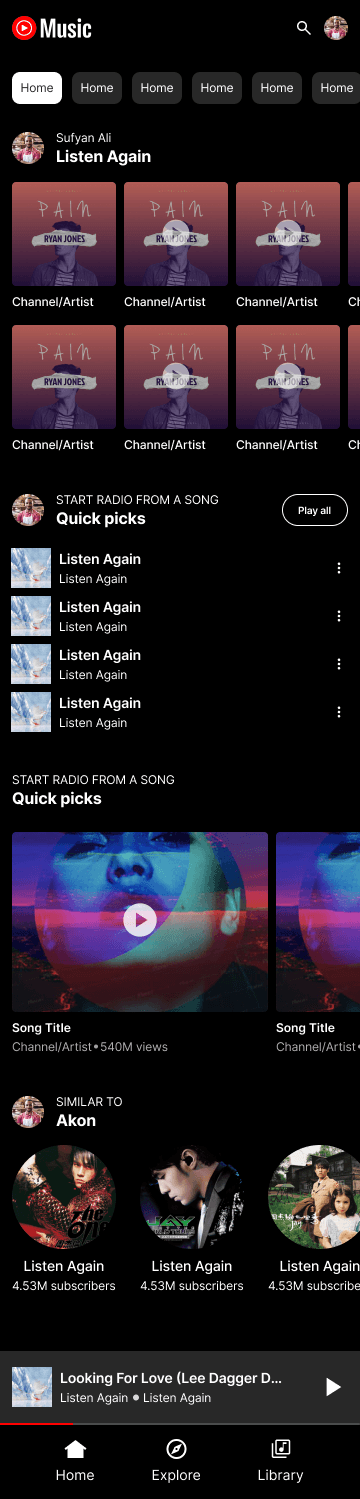
Though the template was useful, it was outdated, so the first step was to update the YouTube template and make it as identical to the current as possible, since YouTube doesn't have an open library of assets and elements to use.

Provided Template
Updated Ver.
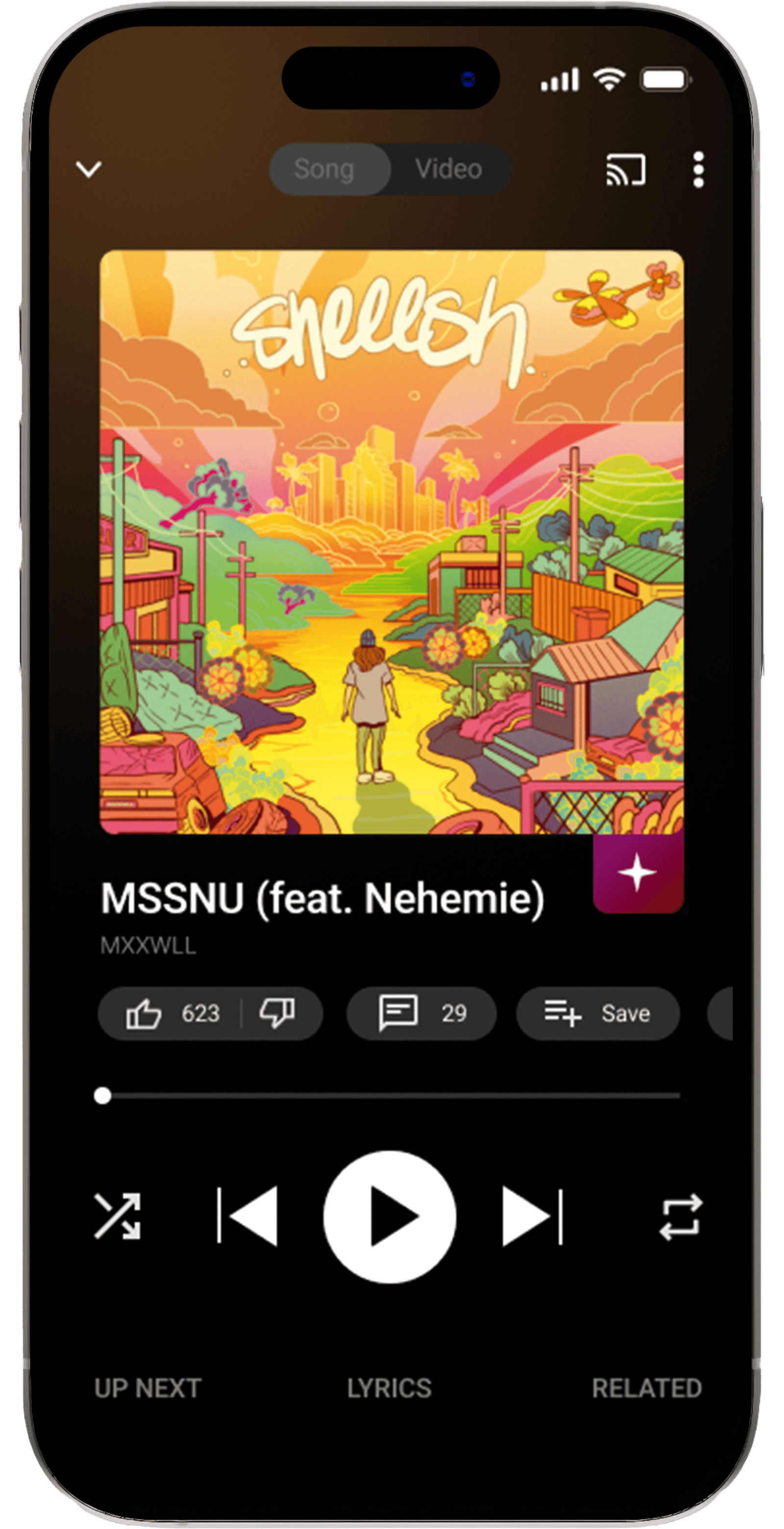
To communicate to users that songs or playlists are AI generated, YouTube Music's specific AI icon was used to inform users. The icon is only slightly revamped to be slightly more noticeable and present in the designs.
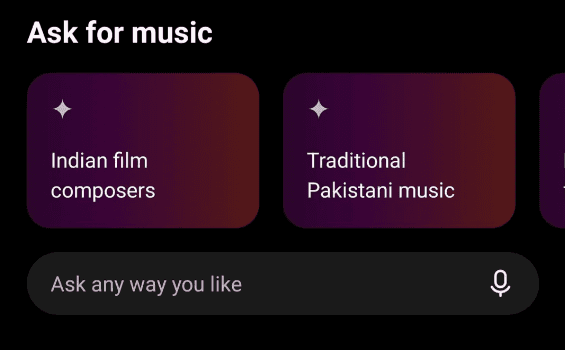
YouTubes AI Icon
AI Indicator
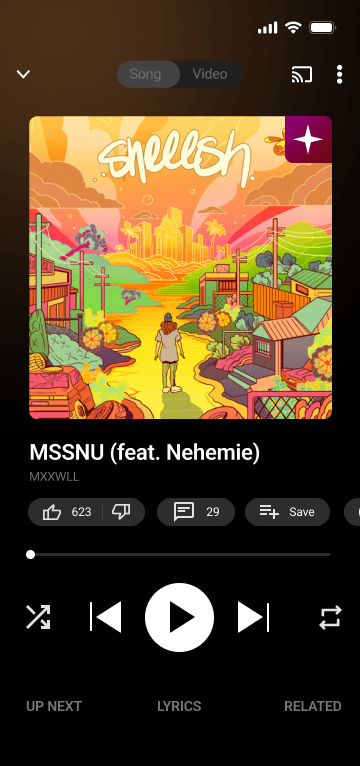
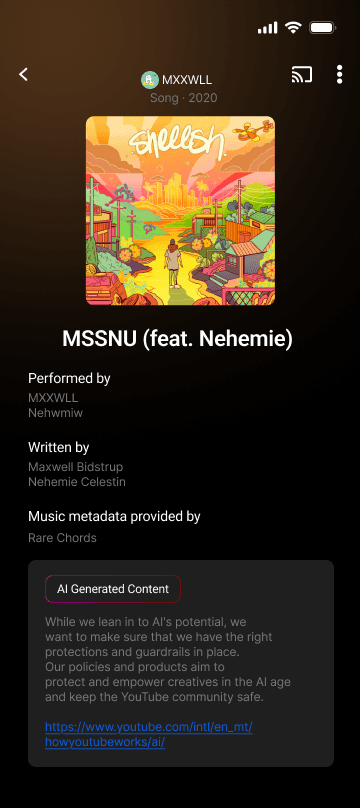
With the icon, I went through and added the AI icon to all places where users would see and interact with songs, such as putting them on thumbnails songs, active playing songs, and descriptions of them as well.
Once the flows were established, I moved on to user testing among six individuals that listen to music constantly on YouTube as well as some that don't to get an idea if new users would be able to understand and navigate the interface.
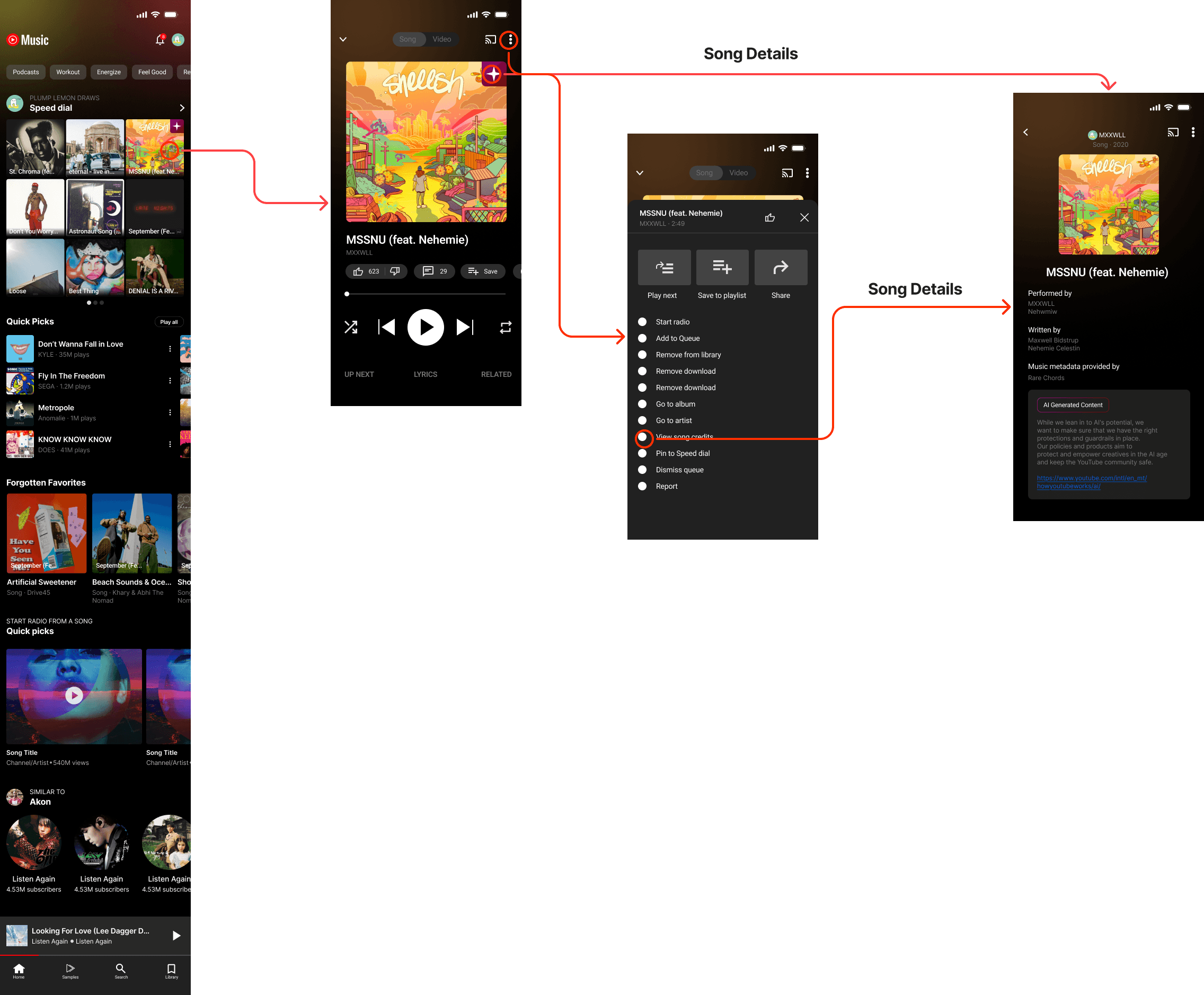
"Navigating AI Details" Observations
75%
Of users initially scrolled before coming back up to see the AI icon.
50%
Of users tried tapping the “related” tab to see the AI details instead of the three dots.
50%
Of users tried tapping the “related” tab to see the AI details instead of the three dots.
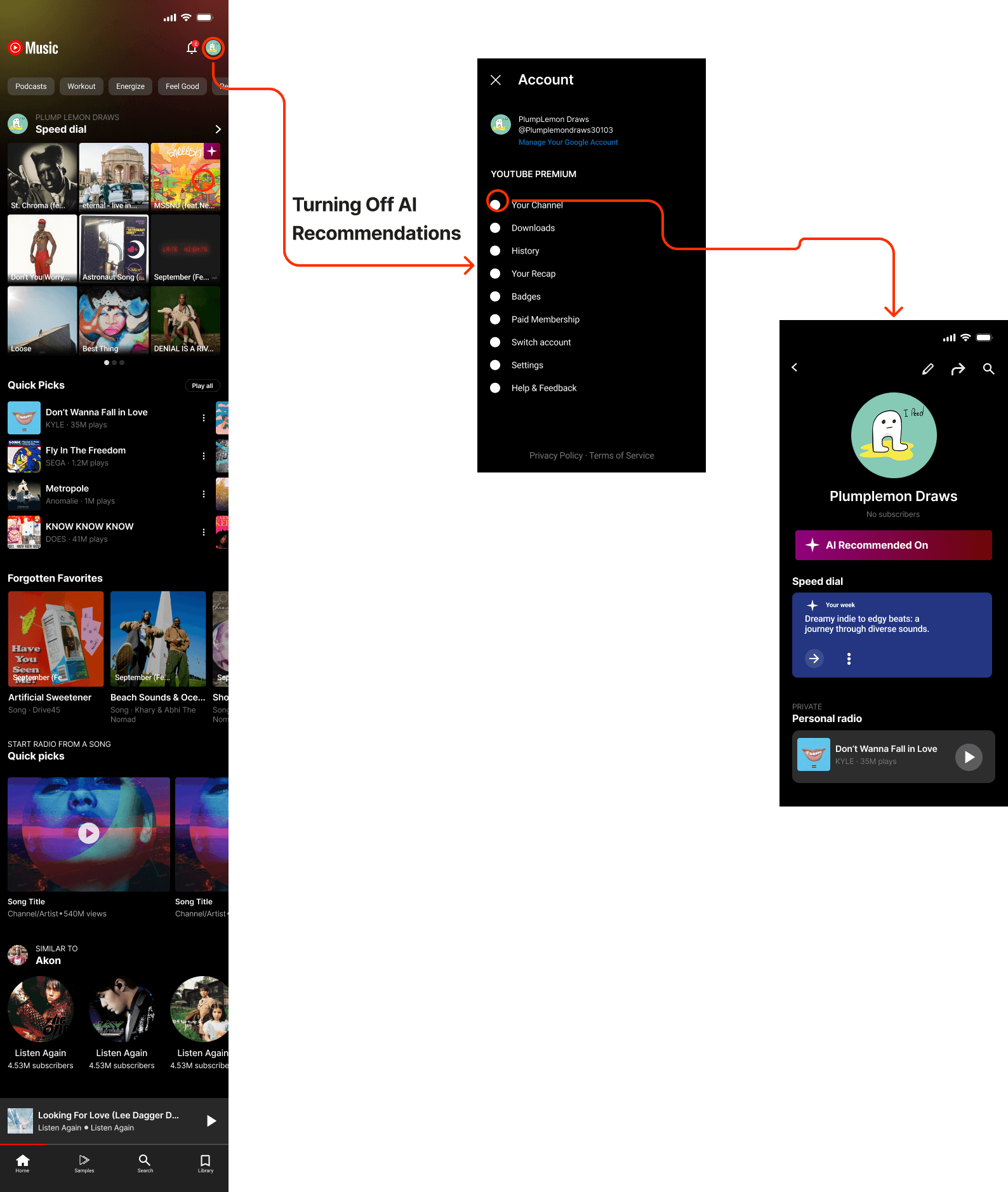
"Turning AI Music Off" Observations
100%
Of users went to settings instead of channel to turn off AI Recommend.
50%
Of users scrolled by turn off button multiple times before seeing it.
From these findings of what worked and what didn't, I then tweaked and refined the flows and accounted for the multiple ways users tackle the flow at hand, results which you can see below in the final outcome.
Final Product
Lets do a quick recap of how we got here:
01. The Goal
Improving how users interact with AI music on their platforms.
02. Pain Points
Users hated lack of control with AI music. Not being able to opt-out of AI music or learn about how their platform uses AI.
03. Solution
Adding features to Youtube Music that enables users to recognize what songs are AI, learn more about the AI policy, and the option to opt-out of AI recommended music.
Reflections and Next Steps
This was one of the few case studies that was fun and chaotic to work on since I had a deadline of two weeks to complete the project. Learning about everyone's perspective and opinions on AI has been honestly eye-opening, seeing how the majority of people hates it but eye opening seeing how others see it's use in helping beginner artists brainstorm ideas.
As fun and chaotic as this project was, there are still areas I know I can improve in and even add to this case study, such as:
1
Interviewing more musicians to get an even better understanding of artists views on AI.
2
Creating a sort of tutorial screen for users when the first open the app to show them what's new.
3
Providing more info on what specifically is AI in a song. The whole thing? One instrument? The voice itself?
4
Giving additional features to artists that upload songs to music platforms so that they have more say in AI usage.